

History of Immigration
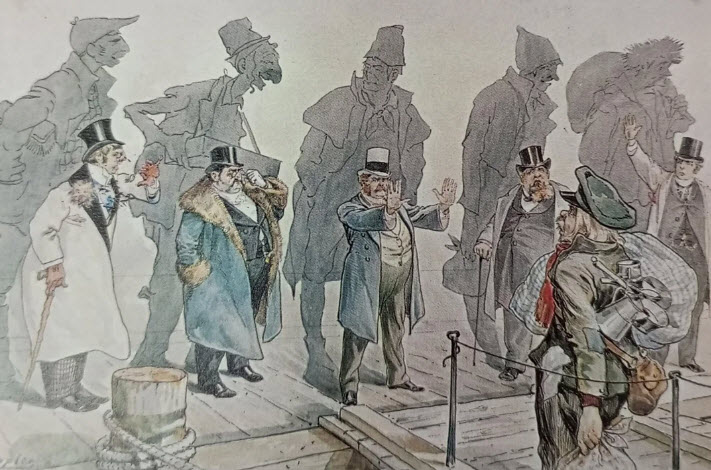
America has a long history of immigration.
Borders and Immigration
With ever-expanding populations, humanity has sought out places to settle. And as the more desirable real estate has been taken, people have had to expand into less hospitable areas. Or into states already established. As things were established in these areas, borders were drawn to define where laws, rules, customs, and governance were practiced. Other incompatible ideas were kept out.
This is the need and importance of borders.
Chronology
Pre-Colonial History of Immigration Laws
1639 – Colonial Massachusetts law authorized towns to remove poor people who had no legal settlement in the town.
1683 – Colonial New York law authorized local officials to send transient beggars to “the country from whence they came.” This is the oldest documented history of immigration in America.
Early History of Immigration Laws in the United States
1790 – The Nationality Act of 1790 was the first law to define eligibility for citizenship by naturalization. It established standards and procedures for immigrants to become US citizens.
1794 – Massachusetts state law allowed for the expulsion of paupers without legal settlement in the state to “any other State”. Or “to any place beyond [the] sea where he belongs.”
Presidential Powers Concerning Immigration
1798 – The Alien Act authorized the president to arrest and deport foreign nationals dangerous to peace and security in the United States.
Subject to the Jurisdiction Of Clarified
1866 – Civil Rights Act of 1866 defined the clause “subject to the jurisdiction of“:
“Be it enacted by the Senate and House of Representatives of the United States of America in Congress assembled, that all persons born in the United States and not subject to any foreign power, excluding Indians not taxed, are hereby declared to be citizens of the United States.”
“Not subject to any foreign power” is a political & legal jurisdiction, not a physical or regional jurisdiction. Crossing into the US without going through the legal immigration process, you are subject to the jurisdiction of a foreign government. The same is true if you went through the process and were issued a deportation order.
President Andrew Johnson vetoed it, and Congress overrode the veto. Congress made it statutory law. It was later made into the 13th, 14th, and 15th Amendments of the Constitution.
Senator Jacob Howard, who wrote the 14th Amendment, further clarified the “jurisdiction clause” of that amendment. He said it was, “simply declaratory of the law of the land (e.g., the Civil Rights Act of 1866). “Every person born within the limits of the United States, and subject to their jurisdiction, is by virtue of natural law (political) and national law (legal jurisdiction) a citizen of the United States”. If you were not born within the limits (legal and political jurisdiction), you are not a citizen.
Additional Clarification on the History of Immigration Concerning Jurisdiction
If you were born in another country and haven’t gone through legal immigration, you are under the jurisdiction of a foreign country, regardless of where you are physically standing (or giving birth). Being the child of a foreign national, regardless of where your parents are standing when you are born, you are also a foreign national.
The Supreme Court of 1898, “United States v. Wong Kim Ark”, got it wrong.
Simply being born within the borders of the United States doesn’t give you the right to invent your own laws or policies and go by those. And that is essentially what is taking place with birthright citizenship in this country today.
1850 – Massachusetts immigration officials were authorized to deport foreign paupers from the United States.
1875 – The US Supreme Court declared state passenger laws in New York, Louisiana, and California unconstitutional.
Statutory Laws That Built on the Naturalization Process
1882 – The Chinese Restriction Act excluded Chinese laborers, with a provision for the deportation of Chinese who unlawfully entered the United States.
1882 – The Immigration Act excluded the poor, people with mental illness, and criminals.
1891 – The Immigration Act added people likely to become public charges, people with contagious diseases, polygamists, contract workers, and assisted immigrants to the excludable class. The act also provided for the deportation of foreign nationals found to have entered the United States unlawfully within a year after arrival.
1892 – The Geary Act required Chinese in the US to obtain a Certificate of Residence. Those who failed to do so would become deportable.
Modern History of Immigration in the US
1924 – The Immigration Act introduced the national origins quota system, starting quantitative immigration restriction. It also introduced a consular control system and suspended virtually all Asian immigration.
1930s (Great Depression) – One of the most extensive mass expulsion campaigns in US history, on the premise that Mexican migrants and US-born Mexican Americans were responsible for significant aspects of the nation’s economic miseries. By the late 1930s, 2 million people had been expelled to Mexico; 60% are estimated to have been US citizens.
Immigration Laws Begin to Reflect Illegal Immigration Problem
1942–64 – The Bracero Program, a guest worker program allowing temporary labor from Mexico, issued over 4.5 million contracts in 22 years. The program led to increased unsanctioned border crossings. More people wanted to join than there were available slots, leading to undocumented migration. Returning Braceros encouraged others to migrate.
1954 – The Immigration and Naturalization Service launched Operation Wetback, a paramilitary campaign to expel Mexican migrants. Over 1 million people were apprehended; many families were separated by deportation. Operation Wetback reduced unauthorized crossings; the government replaced those workers—because of employer demands—with legal guest workers through the Bracero Program.
1964 – Congress ended the Bracero Program. Mexican workers accustomed to US employment continued migrating—now without authorization.
Civil Rights Actions By Congress Concerning Immigration
1965 – The Immigration and Nationality Act (also known as the Hart-Celler Act)
- Replaced the race- and nationality-based quota system that had been in place since 1924 with numerical quotas on migration from all countries, including on independent countries in the Americas for the first time.
- Created a preference system that focused on immigrants’ skills and family relations with citizens or US residents and exempted immediate relatives of US citizens from the quota.
- Provided a permanent and systematic procedure for the admission of refugees of special humanitarian concern to the US.
- Incorporated the UN Refugee Convention definition of a refugee into US law.
- Mandated the establishment of procedures whereby a person at the border or in the US, regardless of status, could seek asylum.
- Prohibited return of any asylum seeker to a country where their life or liberty would be threatened.
Government Actions That Address Growing Problem of Illegal Immigration
1980s – Thousands of Latin Americans fled to the US due to violence and poverty. US immigration officials refused to hear or summarily denied asylum claims from Salvadorans and Guatemalans, prompting the growth of the Sanctuary Movement and leading to a federal court settlement requiring new hearings for hundreds of thousands of asylum seekers. The US also pressured Mexico to block migrants before they reached the US border. As a result, Mexico deported more Central Americans than the US.
1986 – The Immigration Reform and Control Act (IRCA)
- Introduced border fortification and increased border enforcement to deter unauthorized migration. Instead of inhibiting migration, the policy changed behavior, as migrants, fearing the risks of crossing multiple times, brought their families and settled permanently. The overall unauthorized migrant population living in the United States increased.
- Granted a pathway to permanent residency to unauthorized immigrants who had lived in the US since 1982 or worked in certain agricultural jobs.
- Imposed sanctions on employers who knowingly hire unauthorized workers.
The Politicization of Immigration
- Revised the preference categories for immigration visas (including limiting visas for low-skilled workers) and created new diversity and specialty immigrant visas and temporary visas.
- Authorized the attorney general to grant “temporary protected status” to nationals of countries suffering from armed conflicts, natural disasters, or “other extraordinary and temporary conditions.”
1996 – The Illegal Immigration Reform and Immigrant Responsibility Act of 1996 (IIRAIRA)
- Added penalties for immigrants who commit crimes in the United States or undocumented immigrants who stay in the US for statutorily defined periods of time.
- Created an expedited removal process, mandating detention and fast-track removal without immigration court proceedings.
Government Actions On Immigration
2004–18 – Mexico deported 1.7 million Central Americans; the US deported 1.1 million Central Americans.
2006 – The Secure Fences Act mandated that the Secretary of Homeland Security act quickly to achieve operational control over US international land and maritime borders, including an expansion of existing walls, fences, and surveillance.
2008 – The Trafficking Victims Protection Act created visas for victims of trafficking and special screenings for unaccompanied children. Unaccompanied children from noncontiguous territories are referred to the Office of Refugee Resettlement.
2010 – Los Zetas cartel massacred 72 Central American migrants who were unable to pay the cartel. Cartel violence against Central American migrants has since escalated.
2012 – The Deferred Action for Childhood Arrivals (DACA) executive action enabled young adults (ages 15 to 30) brought to the US illegally as children to apply for temporary deportation relief and a two-year work permit.
2015 – Decision in Flores v. Johnson set detention conditions for families and limited it to 20 days.
2020 – Section 265 of US Code Title 42 was invoked to prohibit entry and authorize expulsion of border crossers in the name of preventing the spread of COVID-19
Events in the History of Immigration That Influenced Laws & Policies
Open Borders Policies
In 2020, Joe Biden took the Presidency. Immediately, he opened the borders after Trump closed them during his first administration. This is part of the history of immigration in the US. He tried to stave off criticism first by hiring Alejandro Mayorkas as Department of Homeland Security secretary. Mayorkas told Americans the border was under control despite daily videos to the contrary. Biden’s administration tasked Vice President Kamala Harris with “finding a diplomatic solution to illegal immigration. The result of that was complete and utter failure.
Finally, Biden tried to blame Republicans for the problem, telling Americans he needed the Republican controlled Congress to pass a bill to give him more support. This was proven wrong by the second Trump Administration, which closed the border completely within 5 months.
But the “Open Borders” impact was already felt. 21 million people were let in illegally.
Paroling Illegal Immigrants Once Inside Our Borders
The Immigration and Nationality Act (INA) is the primary U.S. federal law governing immigration, consolidating and organizing immigration rules since its original enactment in 1952 (McCarran-Walter Act) and notably reformed by the 1965 Hart-Celler Act, which abolished national origins quotas and prioritized family reunification and needed skills, shaping modern U.S. immigration policy by establishing pathways for family, employment, and humanitarian-based visas while defining citizenship and removal processes.
These facts are part of the history of immigration in the US.
The negative effect of this law is the widespread abuse of its segments. Democrats used the idea of paroling foreign nationals petitioning for asylum and immigration after they illegally crossed our borders.
Initially, anyone caught crossing our borders illegally would be deported immediately. Paroling gave these illegals additional process (“due process”).
Many who registered for their parole hearings never appeared. It is estimated that of the 21 million who came through during the Biden administration, only 2 million actually went to their hearing. Fewer than that actually obeyed their deportation orders and STILL remain here.
If you cross over illegally and register for a parole hearing, you may be granted a little leniency. But if you come in through an illegal point of entry, evade detection, refuse to register for a parole hearing, or fail to show up for your hearing, clearly you are deliberately squatting on the land and don’t care about the law. 18 MILLION illegal immigrants don’t care about our laws!
Parole Hearing Registration is a privilege we don’t have to offer. It’s an honor system, and obviously, we can’t trust illegals to honor that system. It is an additional “due process” our very generous nation affords illegal aliens. But 18 million illegal immigrants have thumbed their noses at that privilege, flaunting it in American citizens’ faces.
Alleged Compassion
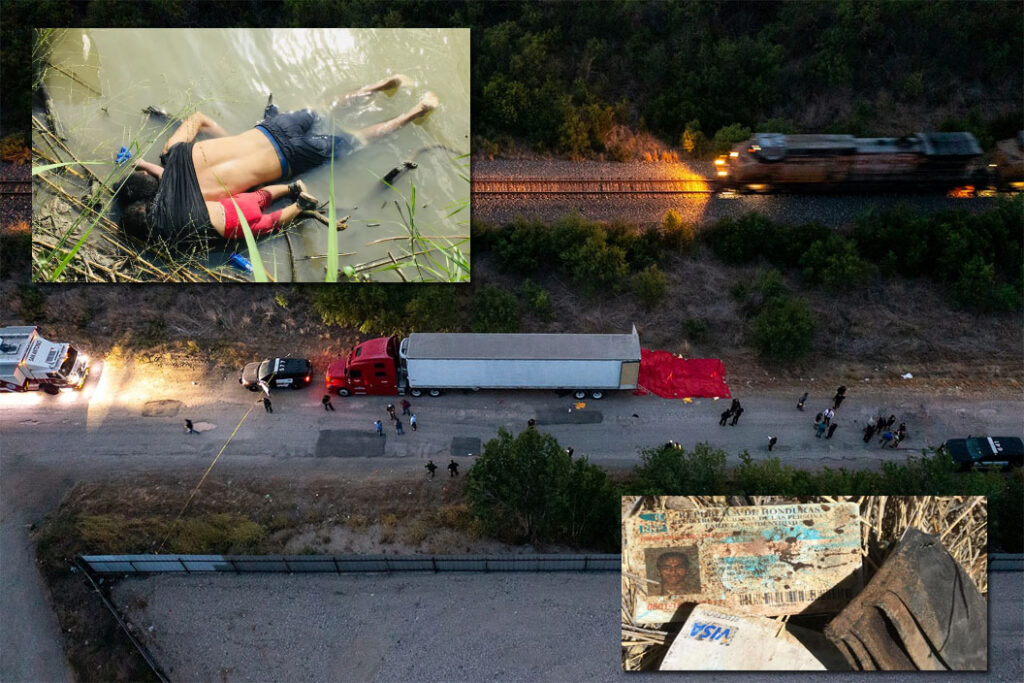
People on the political left tell us they feel bad for the people making illegal border crossings. Democrats, whether in word or in deed, encouraged them to come to the US. But is it compassion? Or is that just a false front, “moral garments” for their actual motives?
We have no idea how many perished trying to get to the US during “Open Borders”. But their families know—if they’re alive.
Why expose them to a hostile land for typically hundreds—if not thousands of miles? Why expose them to hostile people along the way who abuse, murder, rob, and exploit them? If they are concerned for them, why did they set things up so they would be exposed to this?
Census Headcount
Constitutional Mandate (1787): The U.S. Constitution required a census every decade to count inhabitants for proportional representation in the House.
The U.S. started headcounts (censuses) to determine representation with the first U.S. Census in 1790, as mandated by the Constitution, to apportion seats in the House of Representatives, a practice that continues every ten years to reflect population shifts and ensure equitable representation.
Early Apportionment (1790-1910): Congress passed laws after each census (e.g., 1790, 1800, 1810) to set the number of representatives based on population changes, though methods varied.
The Reapportionment Act of 1929: This act permanently fixed the size of the House at 435 members and established a permanent procedure for automatic reapportionment after each census, ensuring representation remained proportional.
These are facts of the history of immigration in the US.
In essence, the practice began with the nation’s founding, with the 1790 census serving as the first data point for legislative representation, a process formalized and made automatic by the 1929 Act.
Figures Lie, and Liars Figure
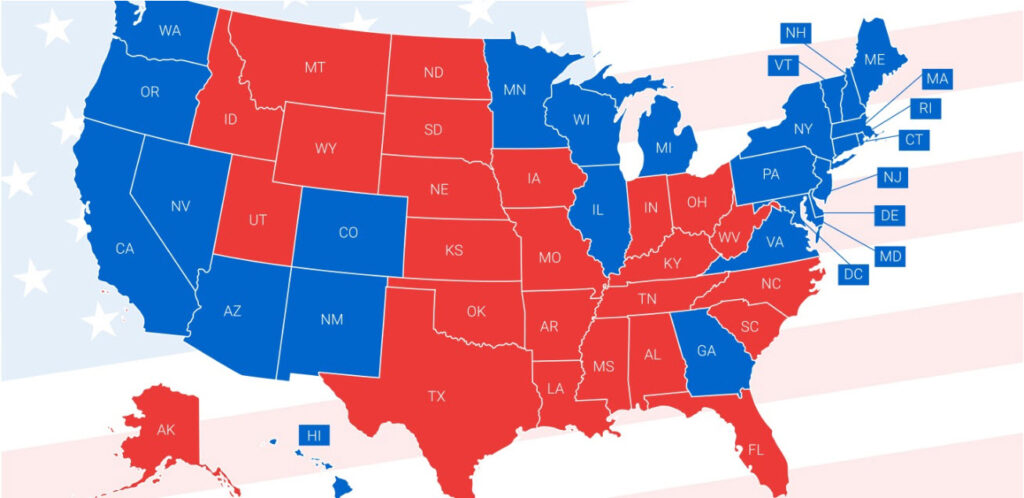
It is very easy to manipulate the numbers in a district and affect the census count. The most common way is to “gerrymander”. Gerrymandering is “the practice of dividing or arranging a territorial unit into election districts in a way that gives one political party an unfair advantage in elections”. States today have gerrymandered so much that there is no way for one party to have representation in some states.
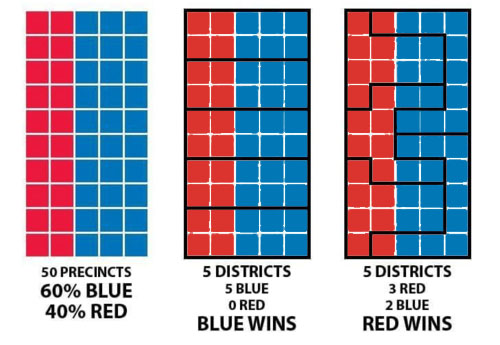
The illustration could easily be flipped to show more blue districts. Some regions are naturally one party or the other. In more rural, less populated states, there are many more Republicans than Democrats, and in concentrated urban areas, there are far more Democrats.
Using Illegal Immigration to Exploit Voter Districts
With the influx of 21 million foreign nationals illegally inside US borders during the Biden administration, the census was exploited to benefit Democrats. Whether it was deliberate or incidental is difficult to prove. But the fact is, it could affect the vote districts, and it was done.
On its own, the voter distribution of these newcomers is unpredictable. To impact “how” newcomers vote, the governing officials have to demonstrate they are the party that better supports them.
In this scheme, Democrats are the party that passionately befriends them — even to the detriment and/or exclusion of their own constituents. They encourage their constituents to fight federal law enforcement to keep unlawful foreign nationals in the US. They say it’s because they have compassion for those illegals and don’t want them to go back and face their situations where they came from. But is it compassion?
It’s for an ulterior motive that they work so hard to defy US immigration laws. Many Democratic leaders who are now fighting to keep illegal aliens inside our borders have argued to get them out when their scheme wasn’t being threatened.
Video of Chuck Schumer & Nancy Pelosi opposing illegal immigration
Chain (Blockchain) Migration
Chain migration, as a formalized system, effectively started with the Immigration and Nationality Act of 1965 (INA) in the U.S. The Act prioritized family reunification over national origin quotas, allowing immigrants to sponsor relatives, thus creating family chains.
The concept of family moving together has always existed. This landmark law significantly shifted immigration patterns, making family ties a central pillar of U.S. policy and leading to more diverse immigration from Asia and Latin America.
The problem with Chain Migration is that people who are not adequately vetted can bring in family members who also need to be vetted. They can bring in extended family — all of whom need vetting. With weak screening, many have been allowed in who hold life philosophies and doctrines that are not very compatible with our Constitution and way of life, which stimulates so many to migrate here. This is part of the history of immigration in the US.
Birthright Citizenship Ruling by the Supreme Court in 1898

In 1898, in a Supreme Court case called “United States v. Wong Kim Ark“, ” the Court weighed in on what a birthright citizen is. This case became the legal precedent from which any other cases would be weighed. However, the court got it wrong.
“In a 6-to-2 decision, the Court ruled in favor of Wong Kim Ark. Because he was born in the United States and his parents were not “employed in any diplomatic or official capacity under the Emperor of China,” the Citizenship Clause of the Fourteenth Amendment automatically made him a U.S. citizen, the court ruled.”
HOWEVER, Wong Kim Ark was a child of foreign national parents who gave birth to him on US shores. Wong’s parents were in the US legally, according to the Supreme Court. They had a residence and dwelt in it while in the US for their business. That is a distinction made in this case.
Ark was a legal permanent resident when he had children. This qualified Ark’s children to be birthright citizens. This is not the case for foreign nationals without a legal citizenship status. Simply being born on US shores isn’t enough of a qualification.
“In the Country” Doesn’t Legally Mean You Are “Subject to US Jurisdiction”
According to the Supreme Court, people not in the country legally, when they give birth, are not subject to US jurisdiction. Because Ark’s parents lived in China and were subject to Chinese jurisdiction, their children were also foreign nationals. The parents were subject to the jurisdiction of China, not the US, according to the legal precedent available in 1898.
That ruling essentially gave any foreign national permission to come here and simply say they are subject to the jurisdiction of the United States. But simply saying you are subject to the jurisdiction is not sufficient. You have to provide proof. If you’re in the country illegally, you don’t have proof.
Threading the Scheme
Because we have these historical actions on immigration, an illegal pathway is being exploited by a single party to gain enough votes to ensure their opposition will never win another election. All of the above things are being abused to circumvent the laws of the land and bring in millions of illegal aliens.


Powered by WordPress

Send your thoughts and questions on the History of Immigration in the United States
We invite you to send your respectful questions and comments for discussion.